
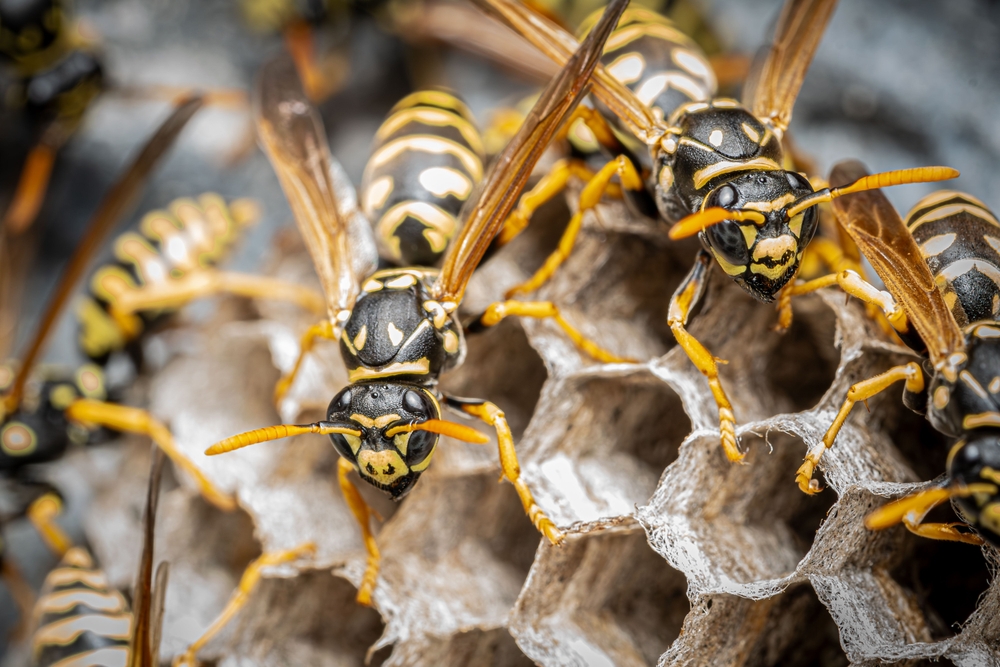
Wasps in Maryland become hard to ignore by late summer. Yellowjackets circle trash cans and outdoor meals, paper wasps patrol rooflines, and large hornets appear near trees, wall openings, and porch lights. At the same time, cicada killers may hover over lawns and alarm homeowners despite posing far less risk than their size suggests.
This seasonal increase has a practical explanation. Social wasp colonies are approaching their largest populations, more workers are searching for food, and mature nests are easier to disturb. The most important question is not simply what color the wasp is. Its body shape, nest location, traffic pattern, and behavior around people provide better clues about the species and the level of risk.
Why Maryland Wasps Become More Noticeable in Late Summer
Late summer brings several changes that make wasps more visible around Maryland homes. Social colonies have had months to grow, more workers are moving between the nest and food sources, and nests that were easy to overlook in spring may now sit close to routine yard activity.
Maryland has more than 1,000 wasp species, according to the University of Maryland Extension’s guide to social wasps. Most are solitary insects that do not live in large colonies or defend a shared nest. The late-summer conflicts homeowners encounter most often involve social species such as yellowjackets, bald-faced hornets, European hornets, and paper wasps.
A social colony begins in spring when a queen establishes a small nest and raises the first workers. Those workers take over nest construction, food collection, and care of developing young. By late summer or early fall, the colony may be at or near its seasonal peak.
Adult wasps feed on liquids such as nectar, fruit juice, sap, and honeydew. Workers also collect insects and other protein sources for larvae. As seasonal food supplies change, foraging wasps may investigate fallen fruit, open trash cans, sweet drinks, and meals served outside.
This does not mean every wasp suddenly becomes aggressive. A wasp visiting flowers or hovering near a drink is usually foraging. The greater danger comes from disturbing a nest, especially one hidden in the ground, inside a wall, or near an area that people use regularly.
How to Identify Common Wasps in Maryland
Accurate Maryland wasp identification depends on more than black-and-yellow markings. The wasp’s body shape, nest design, nesting location, and flight pattern usually provide more useful clues than color alone.
| Wasp | Key Identification Clue | Typical Nest Location | Primary Concern |
| Yellowjacket | Compact black-and-yellow body | Soil, shrubs, sheds, soffits, or wall voids | Large, defensive colonies |
| Paper wasp | Slender body with long, dangling legs | Open comb under an eave or sheltered surface | Stings when a nearby nest is disturbed |
| Bald-faced hornet | Black body with white markings | Enclosed gray nest in a tree or on a structure | Strong defense around an aerial nest |
| European hornet | Large reddish-brown and yellow body | Hollow trees, attics, barns, or walls | Concealed colonies and nighttime activity |
| Cicada killer | Very large body with yellow abdominal markings | Individual burrows in sunny soil | Intimidating appearance, usually low sting risk |
Look from a safe distance at the location the insect repeatedly returns to and whether many wasps are using the same entrance. Never approach a nest simply to improve the identification. Binoculars, a photograph taken with a zoom lens, or observation from inside a building can provide useful details without provoking the colony.
Yellowjackets: The Main Late-Summer Yard Threat
Of the common wasps in Maryland, yellowjackets are among the most likely to create serious conflicts around homes. Their nests can be hidden, their colonies become large, and routine activities such as mowing or trimming may bring people unexpectedly close to the entrance.
What Yellowjackets Look Like
Yellowjackets are compact black-and-yellow wasps approximately ⅜ to ⅝ inch long. They have relatively short legs, little visible body hair, and a sharply defined waist. Their markings can cause confusion with bees, but yellowjackets generally appear smoother and less fuzzy.
Where Yellowjackets Build Nests
Depending on the species, yellowjackets may nest underground in old animal burrows or in concealed spaces such as shrubs, sheds, soffits, and wall voids. Underground nests are particularly hazardous because homeowners may not notice them until a mower, string trimmer, pet, or foot passes close to the entrance.
A steady stream of small wasps entering and leaving one hole is a strong sign of a social colony. Stop mowing or working nearby and keep children and pets away from the area.
Why Yellowjackets Cause More Problems in August
Large yellowjacket colonies can contain thousands of workers by their seasonal peak. More workers are available to forage around outdoor meals, fallen fruit, recycling containers, and garbage cans. Their interest in both sugary foods and protein brings them into frequent contact with people.
Yellowjackets also respond quickly when their nest is threatened. Vibrations from lawn equipment can trigger defensive activity. An attacking worker may release an alarm pheromone that recruits additional nestmates, turning one sting into a larger response. Active nests beside walkways, patios, play areas, and regularly maintained lawns should be handled professionally.
Paper Wasps: Long-Legged Wasps Under Eaves
Paper wasps are common around rooflines, porches, railings, and other sheltered parts of Maryland homes. Their nests are usually easier to see than yellowjacket nests, but their location can place them close to doors, seating areas, and routine maintenance work.
How to Recognize a Paper Wasp Nest
Paper wasps are slender insects approximately ⅝ inch to nearly 1 inch long. Their long legs often hang below the body as they fly. They build exposed, umbrella-shaped paper combs with visible cells rather than covering the nest with an outer shell.
Common nesting locations include eaves, porch ceilings, door frames, window trim, railings, branches, and sheltered outdoor furniture. Because the comb remains visible, paper wasp nests are usually easier to identify than concealed yellowjacket colonies.
When Paper Wasps Become a Concern
Paper wasp colonies generally contain about 20 to 75 members at peak and are usually less defensive than yellowjackets or hornets. They may still sting when someone works close to the nest, opens a door beside it, trims the supporting branch, or reaches into the sheltered space where it is attached.
Location should guide the response. A nest high on an unused structure may present little immediate risk. The same nest beside a doorway, deck railing, or frequently used seating area is more likely to be disturbed.
Bald-Faced Hornets: Black-and-White Nest Defenders
Bald-faced hornets are easy to distinguish from most other Maryland wasps because of their black-and-white coloring and large enclosed nests. Their colonies often remain out of the way, but nests near homes, walkways, or landscaping can become hazardous when people pass too close.
Despite the name, bald-faced hornets are aerial yellowjackets rather than true hornets. Workers are approximately ⅝ to ¾ inch long and have black bodies with distinct white markings on the face and abdomen.
They construct enclosed gray paper nests that may hang from trees, shrubs, utility structures, roof overhangs, or other building surfaces. A mature nest may contain about 100 to 400 workers, and some nests are built 60 feet or more above the ground.
The greatest risk comes from getting too close to the nest or causing it to shake. A colony high in a tree and far from normal activity may not require immediate removal. A nest beside a driveway, deck, doorway, play area, or landscaping work zone creates a much different situation. Do not strike the nest, cut its branch, or attempt treatment while standing on a ladder.
European Hornets: Maryland’s True Hornets
European hornets attract attention because of their size, nighttime activity, and habit of nesting in hidden cavities. Homeowners may first notice them near porch lights or repeatedly entering an opening in a tree, wall, attic, or outbuilding.
European hornets are Maryland’s only true hornets. They are much larger than yellowjackets, measuring approximately ¾ to 1⅜ inches long. Their bodies combine reddish-brown coloring with yellow areas and dark, teardrop-shaped abdominal markings.
European hornets usually nest inside cavities such as hollow trees, attics, barns, and wall voids. Most peak colonies contain roughly 200 to 400 workers, although larger nests can exceed 1,000. Because the nest is concealed, the first visible sign may be repeated hornet traffic through a structural opening.
Unlike most social wasps, European hornets may fly at night and gather near porch lights, windows, and illuminated entrances. Their size often leads people to mistake them for invasive giant hornets. Northern giant hornets and yellow-legged hornets have not been found in Maryland or neighboring states.
Cicada Killers: Large Wasps With a Lower Threat Level
Cicada killers are among the largest wasps Maryland homeowners encounter, but their behavior differs sharply from that of yellowjackets and hornets. They are solitary hunters, not members of a large colony defending one shared nest.
Eastern cicada killers can reach about 2 inches long. Females dig burrows in sunny, well-drained soil and use their sting to paralyze cicadas, which they carry underground as food for their young.
Several females may create burrows in the same favorable patch of soil, but they do not form one large defensive colony. The University of Maryland Extension’s cicada killer guidance notes that females generally do not bother people. Males may hover, patrol the nesting area, or fly toward passersby, but they cannot sting.
Traffic patterns help separate cicada killers from ground-nesting yellowjackets. Several individual holes, each visited by one or two very large wasps, may indicate cicada killers. Many smaller wasps repeatedly using one entrance are more consistent with a yellowjacket colony.
Let the Nest Location Guide the Identification
When the wasp itself is difficult to see clearly, the nest often provides the fastest and safest identification clue. Its shape, location, and traffic pattern can reveal whether the insects are social nest defenders or solitary wasps using separate burrows.
An open comb with visible cells under an eave usually points to paper wasps. A busy entrance in the soil may indicate yellowjackets. An enclosed gray nest hanging from a branch is typical of bald-faced hornets. Repeated traffic through a wall opening, attic vent, or hollow tree may come from yellowjackets or European hornets. Separate burrows across a sunny area may belong to cicada killers or other solitary wasps.
The nest also helps determine whether action is necessary. Wasps hunting insects in a garden can be beneficial predators, and adults may contribute to pollination as they visit flowers. A nest far from doors, paths, play areas, and yard work may sometimes be left undisturbed. A colony positioned where accidental contact is likely requires more caution.
How to Reduce Late-Summer Wasp Encounters
Late-summer wasp prevention focuses on reducing access to food and avoiding accidental nest disturbance. Small changes around patios, trash storage areas, fruit trees, and outdoor gathering spaces can make these areas less attractive to foraging workers.
Keep outdoor drinks and food covered, and look inside cans or cups before taking a sip. Use tight-fitting lids on trash and recycling containers, clean sticky spills promptly, and remove fallen fruit from the yard. Avoid swatting at a wasp investigating food. Move away calmly and give it space to leave.
Stop mowing, trimming, or working near a known ground nest. If European hornets are gathering near an entrance, reduce unnecessary outdoor lighting when practical. Seal cracks and structural gaps before colonies become established, but do not plug an opening while an active nest remains inside a wall or attic. Blocking the exit may redirect wasps into occupied rooms.
Flooding, burning, striking, or covering an active nest can provoke defensive activity without eliminating the colony. Concealed nests, elevated aerial nests, and colonies in busy areas are safer to address with professional equipment and treatment methods.
When Professional Wasp Control Makes Sense
Not every wasp nest needs to be removed, but location and exposure matter. Professional help is appropriate when a colony is hidden, difficult to reach, or positioned where people and pets cannot avoid it.
Active ground nests in regularly used lawns, colonies inside walls or soffits, nests beside doors and decks, large aerial nests, recurring indoor wasp activity, and properties where someone has a known sting allergy all warrant added caution.
Anyone who develops throat or tongue swelling, breathing difficulty, dizziness, widespread hives, stomach cramps, nausea, or diarrhea after a sting may be experiencing a serious allergic reaction. The American Academy of Allergy, Asthma & Immunology’s guidance on stinging-insect allergies recommends urgent medical attention for potentially serious systemic reactions.
When a nest is hidden or located where people cannot avoid it, Pest Services Company can identify the wasp and determine an appropriate control approach for the property. To schedule help with yellowjackets, hornets, paper wasps, or another active colony, contact the Pest Services Company team.