
A wasp nest that looks harmless in June can be a different problem by August. Social wasp colonies begin with a queen and a small first brood. Once those workers mature, they take over food gathering, nest construction, brood care, and defense. The queen can then focus on laying eggs, allowing the colony to expand much faster.
That is the practical answer to how fast wasp nests grow: growth is slow at first, then accelerates as the workforce increases. Across Maryland, Washington, DC, and Northern Virginia, homeowners often notice the change as heavier traffic around an eave, wall opening, shed, tree, or hole in the ground.
How Fast Do Wasp Nests Grow?
There is no single growth rate for every wasp nest. Species, weather, food, nest location, and the success of the queen all affect the outcome. The pattern is consistent: a colony starts with a limited workforce, gains momentum through midsummer, and reaches its largest size late in the season.
The University of Minnesota guide to wasps and bees explains that social wasp colonies begin with one queen. Some yellowjacket nests may contain about 5,000 wasps by late summer, although many remain much smaller. The useful takeaway is that a nest that appears minor in June can support a large, active colony a few months later.
| Time of Season | What Is Happening | What You May Notice |
| June | The queen raises the first brood and performs most colony tasks. | A small exposed nest or occasional activity at one hidden opening. |
| July | Workers gather food, expand the nest, care for larvae, and defend it. | More frequent flights along the same path. |
| August | The colony has more workers, brood, and nest material to protect. | Heavy traffic and a stronger response to disturbance. |
June: The Nest Is Easy to Underestimate
During the founding stage, the queen builds cells, lays eggs, gathers food, and feeds the larvae. A paper wasp nest may be only a small cluster of open cells. A yellowjacket nest may be hidden underground or inside a structural void, leaving only a small entrance visible.
Because activity is limited, homeowners may assume the nest is inactive. In many cases, the colony is simply waiting for its first workers to mature.
July: The Colony Gains a Workforce
Once workers emerge, they search for food and water, feed larvae, add cells, repair the nest, and guard the entrance. This division of labor speeds both population growth and construction.
By July, repeated traffic through the same crack, gap, or ground opening becomes a more reliable clue than the nest’s visible size.
August: More Workers Are Available to Defend It
By late summer, a successful colony may contain hundreds or thousands of wasps, depending on the species. Enclosed aerial nests may also become more noticeable as workers add layers of paper around the brood comb.
The nest is not literally a fortress, but the comparison fits. There are more workers, more developing young, and more insects available to respond when the colony is disturbed.
What Different August Nests Look Like
Nest appearance depends on the species. A large visible nest is not the only concern. Hidden colonies can support substantial populations without producing an obvious structure outside the home.
Paper Wasp Nests
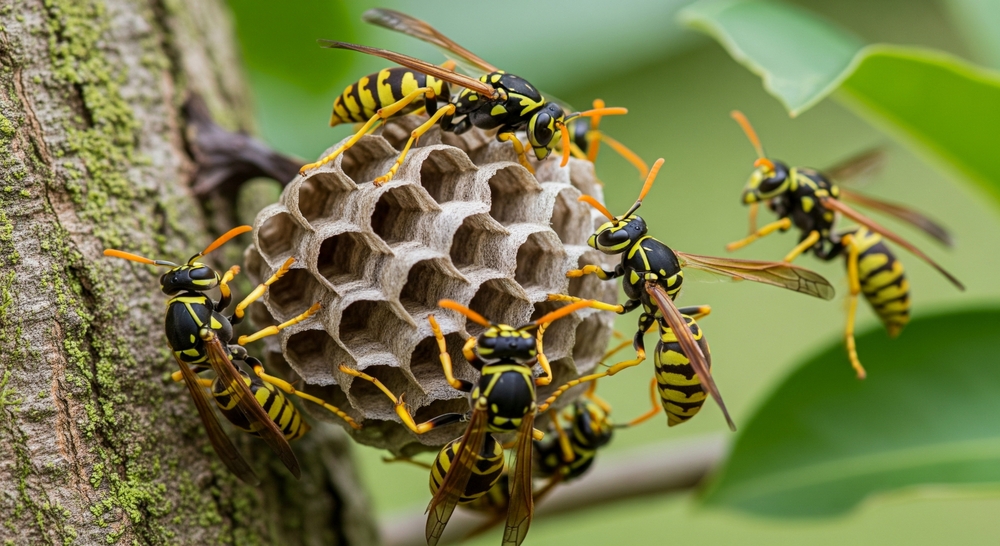
Paper wasps build exposed, umbrella-shaped combs under eaves, porch ceilings, railings, deck supports, and shed roofs. Because the cells remain visible, homeowners can often spot these nests early. Location determines risk. A nest in an unused corner of a shed is different from one beside a frequently opened door.
Yellowjacket Nests
Yellowjackets commonly use underground cavities, old animal burrows, wall voids, attics, and other protected spaces. The nest may remain out of sight while workers enter and leave through one small opening.
The Montana State University fact sheet on social wasps notes that large social wasp colonies may contain hundreds to thousands of individuals and that enclosed paper nests can reach the size of a basketball or larger. The source focuses on Montana species, but the colony structure and seasonal development apply more broadly to social wasps.
Bald-Faced Hornet Nests
Bald-faced hornets, a type of aerial yellowjacket, build enclosed paper nests in trees, shrubs, and sometimes on structures. Workers chew wood fibers, mix them with saliva, and add layers around the internal comb as the colony grows.
A nest high in a tree and away from activity may cause little conflict. The same nest beside a driveway, deck, or walkway deserves more attention.
Why August Colonies Are Harder to Ignore
A larger colony has more workers available to forage and defend the nest. Lawn mowers, hedge trimmers, ladders, pets, and regular foot traffic can create vibration or movement near the entrance. A person may pass the same small June nest without incident, then trigger a defensive response weeks later.
Late summer also brings more encounters away from the nest. Yellowjackets may gather around open trash, sugary drinks, ripe fruit, meat, pet food, and outdoor meals. A wasp visiting food does not prove a nest is on the property, but repeated flights in the same direction can help reveal where it is located.
Signs the Nest Is No Longer Minor
Activity patterns often provide a better measure of colony size than the visible nest. Watch for a steady stream of workers using one opening, increasing numbers over several weeks, or wasps reacting when people approach.
Location is equally important. Nests beside doors, decks, play equipment, pet areas, walkways, or maintained landscaping create more opportunities for disturbance. Indoor sightings near upper-floor windows or light fixtures may point to a colony in a wall, attic, or roof void.
Do not seal an active exterior opening simply because wasps are entering the structure. If their normal exit is blocked, workers may search for another route into the building.
Can You Leave the Nest Alone?
Not every wasp nest requires immediate removal. Social wasps prey on other insects, and a nest far from people may complete its seasonal cycle without causing a practical problem. If the area can be avoided and the nest is unlikely to be disturbed, monitoring may be reasonable.
A nest is less suitable for watchful waiting when people must regularly pass close to it. Underground colonies in lawns, nests inside walls, and nests beside entrances or seating areas deserve more caution. The same applies when someone on the property has a known sting allergy.
Penn State’s guidance on stinging insect nests recommends considering the colony’s size, location, accessibility, and time of year. Established nests near heavily traveled areas are more likely to be disturbed and create a sting risk.
Why Waiting Can Complicate Removal
A late-summer nest may contain more defenders and extend deeper into a cavity than its entrance suggests. Exposed paper wasp nests are easier to see and assess. Underground nests, enclosed aerial nests, and colonies inside siding or roof voids can be harder to locate and reach.
Waiting can also interfere with normal property use. A nest near a deck may disrupt outdoor meals. A ground colony may make mowing unsafe. A wall-void nest may produce indoor activity if workers find an alternate path.
Avoid knocking down, flooding, burning, or sealing an active nest. These actions can provoke the colony, damage the property, or move the problem into another part of the structure.
Check for New Nests Before Summer Peaks
Most social wasp colonies are annual. Workers and males die as the season ends, while fertilized queens overwinter elsewhere and start new colonies the following year. Old nests are generally not reused, but a sheltered eave, shed, wall gap, or quiet corner can attract another queen.
Inspect those areas in spring and early summer. Keep outdoor trash closed, clean up food and drink spills, and repair inactive gaps that provide protected nesting space. Early detection gives you more options before activity reaches its late-summer peak.
Get Help With a Growing Wasp Nest
If wasps are using a doorway, deck, wall opening, roofline, or another area your household cannot avoid, professional identification can clarify what is happening and where the colony is located. Pest Services Company helps homeowners and businesses address wasp activity across the Washington, DC metropolitan area. To arrange an inspection or discuss a nest on your property, contact the Pest Services Company team.