
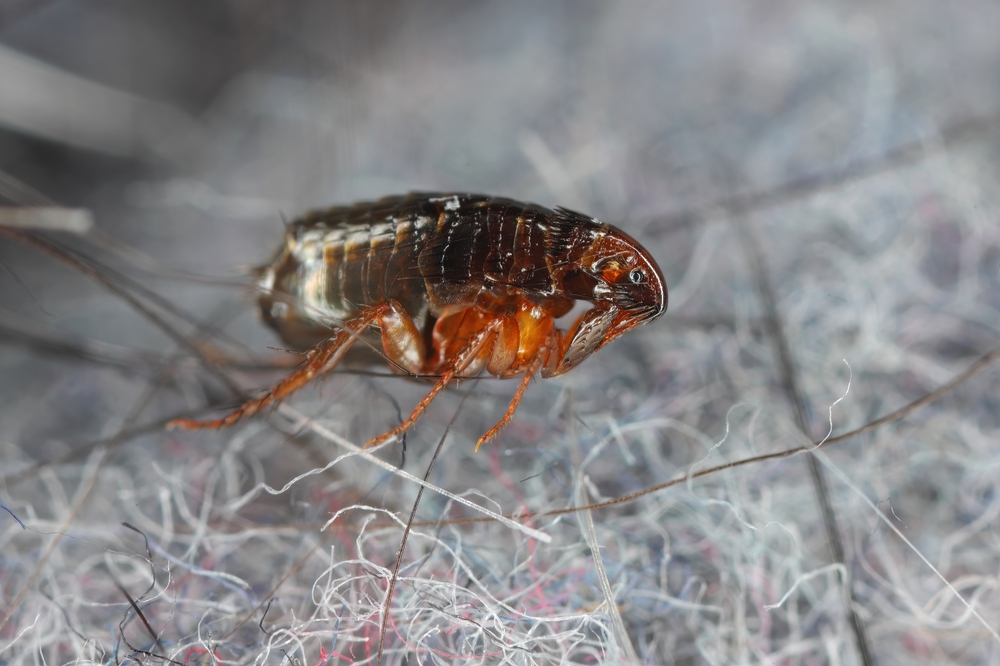
Treating your dog is an important first step, but it does not immediately eliminate a flea infestation throughout the home. Adult fleas live and feed on pets, while eggs, larvae, and pupae develop in carpets, bedding, upholstered furniture, floor gaps, and other protected areas. As those immature stages mature, newly emerged fleas can continue biting people or jumping onto the dog.
That is why flea bites after treating a dog do not automatically mean the product failed. The infestation may still be moving through its life cycle, another pet may be untreated, or fleas may be entering from an outside source. In some cases, marks that look new are older bites that remain irritated. Lasting control requires treating every pet appropriately and addressing the places where fleas develop.
Treating the Dog Does Not Treat the Whole Infestation
The fleas visible on your dog are only part of the problem. According to the Companion Animal Parasite Council, adult fleas on pets account for about 5 percent of an infestation. The remaining 95 percent consists of eggs, larvae, and pupae in the surrounding environment.
Flea eggs fall from the animal and collect where the dog sleeps and rests, including pet beds, rugs, sofas, crates, and floor edges. A product used on the dog can control fleas that reach the pet, but it does not remove immature fleas already spread through the house.
How the Flea Life Cycle Keeps Bites Appearing
Fleas develop through four stages. Only the adult stage normally lives on the pet. The others remain in hard-to-reach areas of the home.
| Flea Stage | Common Location | Why It Matters After Treatment |
| Egg | Bedding, carpets, and furniture | Eggs laid earlier can keep hatching |
| Larva | Carpet fibers, floor gaps, and beneath furniture | Larvae remain away from the treated dog |
| Pupa | A cocoon in sheltered areas | The protective stage can delay results |
| Adult | On pets or searching for a host | New adults may bite before being controlled |
Eggs May Already Be Throughout the Home
The Merck Veterinary Manual reports that female cat fleas can produce up to 40 to 50 eggs per day during peak production. Although laid on the animal, the eggs readily fall into the environment. By the time scratching or bites become noticeable, they may already be spread through the home.
Larvae and Pupae Stay Protected
After hatching, larvae avoid light and settle in carpet, beneath furniture, along baseboards, and around pet resting areas. They do not live on the dog, so pet treatment does not directly control them.
Larvae eventually form pupae inside protective cocoons. Adults may emerge after the dog has been treated and the home has been cleaned. These may be new adults completing a cycle that began earlier, not fleas that survived treatment.
Why Fleas May Still Be Biting After Treatment
Continuing bites usually point to a gap between pet treatment and environmental control.
Immature Fleas Were Present Before Treatment
Eggs, larvae, and pupae already in the home do not disappear when the dog receives medication. As adults emerge, they may bite a person before reaching the treated animal. When the plan is working, live fleas, pet scratching, and new bites should gradually become less frequent.
The Product Has Not Reached Every New Flea
Flea preventives come in different formulations and do not all act in the same way. A flea may need to contact the product, stay on the animal, or feed before it is affected. Seeing a live flea on a recently treated dog does not by itself prove that the treatment is ineffective.
Follow the label and ask a veterinarian what to expect from the specific product. Do not apply an extra dose, shorten the dosing interval, or combine treatments without professional guidance.
The Application or Schedule Was Incomplete
A missed dose, an incorrect amount, or improper application can reduce protection. Product selection must also account for the animal’s species, age, weight, and health. If a dose was missed or used incorrectly, contact a veterinarian.
Another Pet Is Maintaining the Infestation
An untreated dog or cat can carry adult fleas even when it shows little scratching. Those fleas continue feeding and laying eggs, replenishing the population in the home. Every pet needs an appropriate product, and a treatment labeled for dogs should never be assumed safe for cats.
Fleas Are Being Reintroduced
Kennels, neighboring animals, wildlife, crawl spaces, and shaded resting areas may provide new fleas. Check beneath decks and porches and around places where stray animals or wildlife spend time.
Are the Marks Really New Flea Bites?
Flea bites often appear as small, itchy bumps around the feet, ankles, and lower legs. They may occur in clusters or short lines, but appearance alone cannot confirm the cause. Bed bugs, mosquitoes, mites, contact dermatitis, and other skin problems can create similar irritation.
A mark noticed today may come from an earlier bite. Flea bites can remain itchy for several days, and sensitive people may have longer-lasting reactions. Older spots can become irritated again after scratching or friction.
Look for evidence beyond the skin. Live fleas, flea dirt in the pet’s coat, increased scratching, and activity around pet bedding provide stronger support for an active infestation. If irritation continues without other signs of fleas, a medical professional can help identify another cause.
What to Do When Flea Bites Continue
Flea control works best as a coordinated process. Treating only the dog leaves environmental stages in place, while treating the house without protecting pets allows adult fleas to keep feeding.
Keep Every Pet Properly Protected
Maintain the schedule recommended by your veterinarian and follow the product label. If live fleas remain common, ask whether the treatment was applied correctly and whether another option is appropriate. Do not stack treatments without veterinary instructions.
Vacuum the Highest-Risk Areas
Vacuum carpets, rugs, upholstered furniture, floor edges, baseboards, cracks, and spaces beneath furniture, with extra attention to pet beds and resting spots. The U.S. Environmental Protection Agency recommends daily vacuuming during an infestation, especially in areas frequented by pets. Empty the vacuum outdoors or dispose of the bag promptly.
Wash Bedding and Treat the Premises Carefully
Wash pet bedding, blankets, crate pads, and removable furniture covers according to their care instructions. For a larger infestation, cleaning may need to be combined with a labeled household product. Some products target adult fleas, while insect growth regulators interfere with immature development.
Follow every label direction, keep children and pets away as instructed, and never apply a premises product directly to an animal unless the label specifically permits it.
Reduce Outdoor Sources
Inspect kennels, crawl spaces, shaded resting areas, and locations where wildlife or stray animals shelter. Remove debris, limit access beneath structures, and avoid leaving pet food outside.
How Long Can Fleas Continue Appearing?
There is no single timeline for every home. Temperature, humidity, infestation size, treatment consistency, and access to hosts all influence how quickly the life cycle is interrupted. Development often takes several weeks, while protected pupae can cause adults to emerge after the first treatment.
Progress should appear as a steady decline in live fleas, scratching, flea dirt, and bites. If activity remains unchanged or increases despite consistent pet and home measures, the infestation may be more widespread than expected or receiving a new supply of fleas.
When to Call for Professional Help
Contact a veterinarian if your dog has intense scratching, hair loss, damaged skin, weakness, or a possible reaction to a flea product. Seek medical care for severe swelling, breathing difficulty, fever, signs of infection, or a persistent rash that has not been identified.
When fleas continue despite coordinated pet treatment and thorough cleaning, a professional inspection can locate hidden hot spots and determine whether the home needs a more complete treatment plan. Pest Services Company helps homeowners address persistent flea activity with a treatment plan based on the property and the extent of the problem. To discuss the next step, contact the Pest Services Company team.