
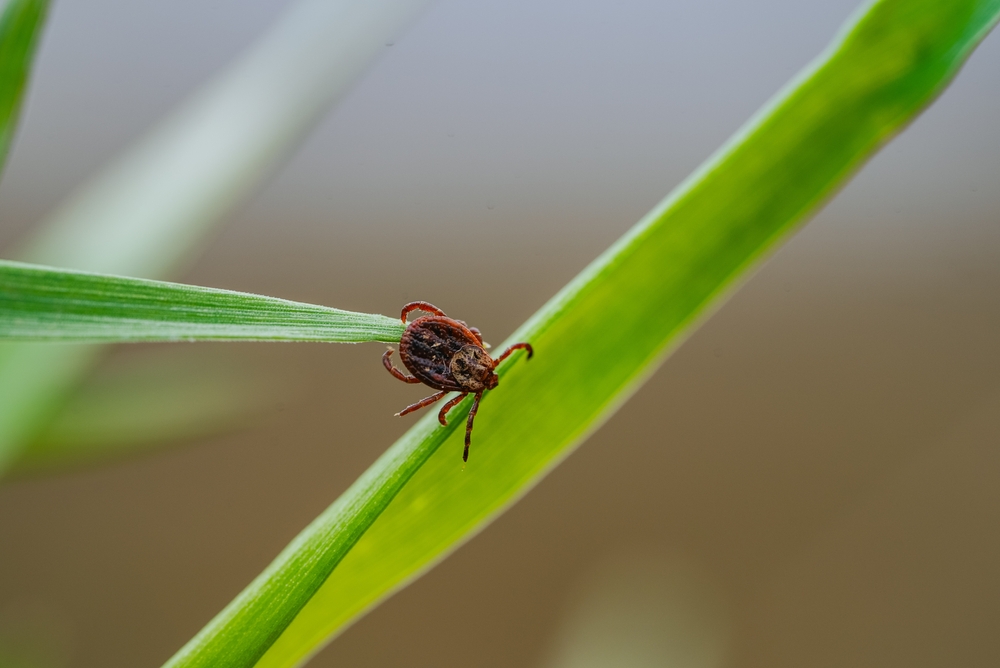
August does not end tick season in Maryland. Blacklegged tick nymphs may still be active, lone star ticks remain a concern, and American dog ticks can still appear during the first part of the month. Late-summer larvae are also active, and their tiny size makes them easy to miss on skin, clothing, pets, and outdoor gear.
The highest-risk areas are usually not the middle of a dry, closely mowed lawn. Ticks are more likely to be found where shade, moisture, vegetation, wildlife, and human activity overlap. Wooded property lines, leaf litter, brush, trail margins, animal resting areas, and dog kennels deserve closer attention. Knowing which ticks use these habitats also helps Maryland homeowners understand which disease risks actually apply.
Why August Is Still Part of Maryland Tick Season
The University of Maryland guide to ticksidentifies August as an active period for several species and life stages. Blacklegged tick nymphs may remain active through August, while larvae are active from July through September. Lone star adults can persist until late August, and lone star larvae may continue into late September. Adult American dog tick activity generally tapers off by early August.
Ticks do not fly, jump, or normally fall from trees. They crawl onto low vegetation and wait with their front legs extended until a person or animal brushes past. This behavior, called questing, makes yard edges, paths, fields, and wooded borders more important than tree canopies.
Where Ticks Hide Around Maryland Homes
Ticks are not evenly distributed across a property. A useful inspection starts where maintained spaces meet less disturbed habitat.
Wooded Edges and Leaf Litter
The line where a lawn meets the woods is one of the first places to check. Fallen leaves, low plants, shade, and retained moisture create suitable conditions for blacklegged ticks. These ticks are closely associated with deciduous forest, forest edges, and the small animals moving through leaf litter.
Routine yard work can bring people into contact with this low vegetation. Moving play equipment and seating away from wooded boundaries can reduce repeated exposure.
Brush and Wildlife Paths
Lone star ticks are strongly associated with dense woodland undergrowth, brush, animal trails, and wildlife resting areas. Around a home, that may include overgrown fence lines, shrubs beside a shed, brush piles, and narrow paths used by deer or other animals.
A tidy yard may still support ticks in an undisturbed corner where vegetation holds moisture and wildlife repeatedly passes through.
Tall Grass and Open Trails
American dog ticks are more often connected with fields, grassy trails, and open areas with less tree cover. A sunny field edge or roadside path can therefore present a different tick risk than a shaded forest floor.
Asian longhorned ticks may also occur in tall grass, pasture, and areas used by livestock or wildlife. The species has been found in Maryland, but its role in transmitting harmful pathogens to people in the United States remains under investigation.
Woodpiles, Debris, and Pet Areas
Woodpiles, stone borders, and debris can create shelter and moisture while attracting animals that carry immature ticks. Store firewood in a dry, open location and remove clutter near patios, pet runs, and walkways.
The brown dog tick differs from Maryland’s primarily outdoor species because it can persist in dog-associated indoor environments. Repeated sightings near kennels, pet bedding, baseboards, or cracks call for inspection of both the animal and the surrounding structure.
Which Maryland Ticks Carry Disease?
Maryland recorded more than 3,000 reported Lyme disease cases in 2024, according to the Maryland Department of Health’s tickborne disease prevention guidance. Lyme disease is the state’s most commonly reported tickborne disease, but it is not the only concern.
A species may be capable of transmitting a pathogen without every individual tick being infected. Risk depends on the species, life stage, local pathogen presence, attachment, and whether the tick previously fed on an infected host.
| Tick Species | Typical August Habitat | Important Health Associations |
| Blacklegged tick | Woods, leaf litter, shaded edges | Lyme disease, anaplasmosis, babesiosis, Powassan disease |
| Lone star tick | Dense brush, animal trails, resting areas | Ehrlichiosis, tularemia, STARI, alpha-gal syndrome association |
| American dog tick | Fields, grassy trails, open areas | Rocky Mountain spotted fever, tularemia |
| Brown dog tick | Kennels, pet bedding, indoor cracks | Rocky Mountain spotted fever and canine infections |
| Gulf Coast tick | Grasslands and coastal uplands | Rickettsia parkeri spotted fever |
| Asian longhorned tick | Tall grass, pasture, wildlife habitat | Human disease role in the United States remains under study |
Blacklegged Ticks
The blacklegged tick, also called the deer tick, is Maryland’s primary Lyme disease vector. It can also transmit pathogens associated with anaplasmosis, babesiosis, and Powassan disease. Adult females are reddish brown with dark legs, while nymphs are much smaller and easier to overlook.
Leaf litter and wooded edges are useful habitat clues, but appearance cannot reveal whether a tick carries a pathogen. Prompt removal is the right response to any attached tick.
Lone Star Ticks
The adult female lone star tick has a pale or white spot on its back. Males and immature stages do not have the same single-dot appearance, so the absence of that marking does not rule out the species.
Lone star ticks are associated with ehrlichiosis, tularemia, and Southern tick-associated rash illness, commonly called STARI. They are not considered Lyme disease vectors. Their bites are also strongly associated with alpha-gal syndrome in the United States. Alpha-gal syndrome is an allergy, not a bacterial infection.
American Dog Ticks
American dog ticks are larger than blacklegged ticks and have pale or mottled markings. They are more likely to be encountered in fields, grassy trails, and open habitats than in deep woodland leaf litter.
This species is associated with Rocky Mountain spotted fever and tularemia. Adult activity generally declines during August, but early-month encounters remain possible.
Less Common Maryland Ticks
Brown dog ticks matter most around dogs, kennels, and indoor pet areas. Gulf Coast ticks have a limited Maryland presence and are associated with Rickettsia parkeri spotted fever. The human disease significance of Asian longhorned ticks in the United States is still being studied.
What to Do After Finding an Attached Tick
Remove an attached tick as soon as possible. The CDC’s tick-removal instructions recommend using clean, fine-tipped tweezers to grasp the tick close to the skin. Pull upward with steady, even pressure, then clean the bite area and your hands.
Do not cover the tick with petroleum jelly or nail polish, and do not use heat to force it to detach. Record the date and likely place of exposure, then watch for fever, rash, unusual fatigue, muscle aches, joint pain, or other symptoms during the following weeks. Contact a healthcare provider if symptoms develop.
How to Reduce August Tick Exposure
Start with the parts of the property people and pets use most. Remove accumulated leaf litter from patios, paths, play areas, and lawn edges. Trim brush around sheds, fences, seating areas, and pet runs. Keep outdoor furniture and play equipment away from wooded boundaries when practical.
Reduce rodent harborage by cleaning up yard debris and spilled birdseed. Keep firewood stacked in a dry area, and check pets after they have been near tall grass, brush, or woodland edges. Use an EPA-registered skin repellent as directed. Products containing 0.5 percent permethrin may be applied to clothing and gear when the label permits, but not directly to skin.
After outdoor activity, inspect the body, clothing, shoes, and pet equipment. Shower promptly and check less visible areas carefully, especially because larvae and nymphs can be difficult to see.
When Professional Tick Control Makes Sense
Yard maintenance can reduce habitat, but it may not resolve persistent activity along wooded boundaries, wildlife paths, or heavily used outdoor areas. A professional inspection can identify where vegetation, animal movement, and property layout are creating repeated exposure.
Pest Services Company provides tick control for homes and properties in Maryland, Washington, D.C., and Northern Virginia. For help evaluating tick-prone areas and selecting an appropriate treatment plan, contact the Pest Services Company team. Targeting the places where ticks are most likely to hide can make outdoor spaces easier to use through late summer.