
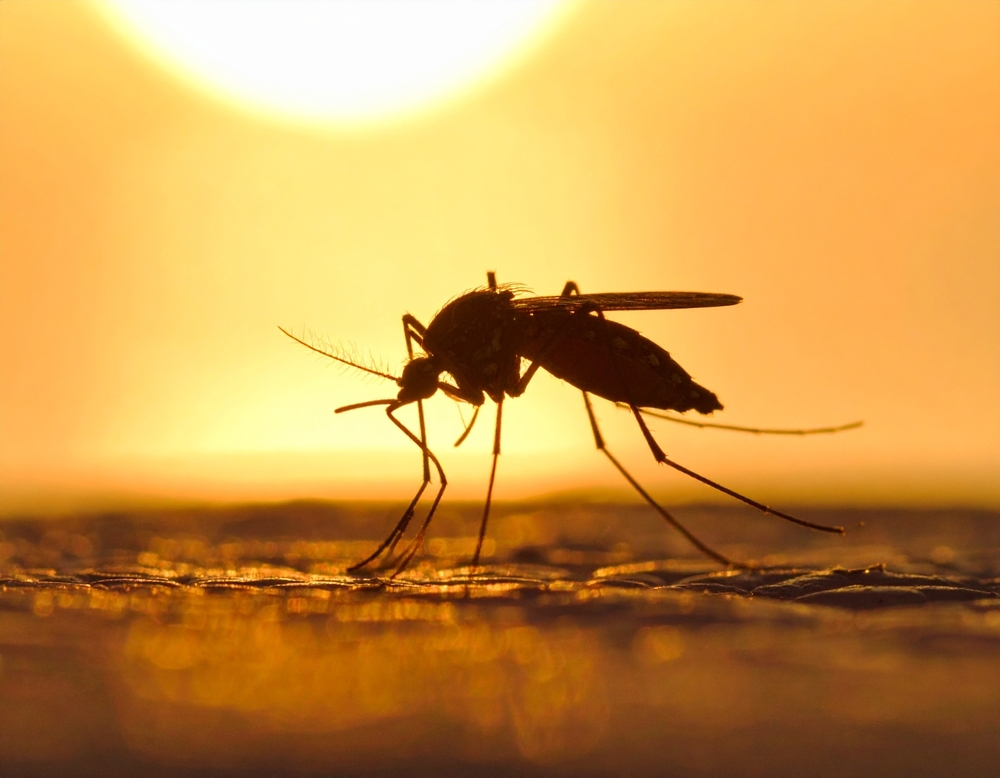
The mosquito circling your ankles in the middle of the afternoon may not be the kind you remember from childhood. Across much of Maryland, one of the most persistent backyard biters is now the Asian tiger mosquito, an invasive species that behaves differently from the mosquitoes many people associate with summer evenings.
Asian tiger mosquitoes bite during daylight hours, develop in small water-filled containers, and usually stay close to where they hatch. A serious mosquito problem may begin in a flowerpot saucer, clogged gutter, toy, tarp, or drainage pipe near your patio. Recognizing that shift is the first step toward better backyard mosquito control in Maryland.
Maryland’s Backyard Mosquito Population Has Changed
The Asian tiger mosquito, Aedes albopictus, was first detected in Baltimore City in 1987. According to the Maryland Department of Agriculture’s Asian tiger mosquito guidance, it has since been documented in every Maryland county except Allegany and Garrett.
This is not a new arrival. The change happened over several decades, but it is recent enough that many Maryland adults grew up with a different backyard experience. Residents may remember mosquitoes as a problem that became noticeable near dusk. Today, some of the most annoying mosquitoes in Maryland yards are active while people are gardening, grilling, or watching children play.
Used tires helped spread the species because they can hold rainwater and transport mosquito eggs. Once established, Asian tiger mosquitoes find ample habitat in residential yards.
How Asian Tiger Mosquitoes Differ From Familiar Mosquitoes
Asian tiger mosquitoes have dark bodies, white-banded legs, and a single pale stripe running down the center of the back. Their behavior is often an even stronger clue than their appearance.
They Bite During the Day
Asian tiger mosquitoes are active from dawn through dusk. A homeowner may be bitten while pulling weeds at 10 a.m. or sitting on the patio at 3 p.m., long before the evening activity many people expect. Maryland backyard mosquitoes can therefore seem more persistent than they did years ago. Residents are often dealing with a species that follows a different daily schedule.
They Stay Close to Home
Maryland officials estimate that Asian tiger mosquitoes commonly travel only about 100 to 200 yards. If they are repeatedly biting in the same yard, the breeding source is likely on that property or nearby. They tend to fly low and often bite around the ankles, knees, and lower legs. Some may also follow people into garages, vehicles, or homes.
| Characteristic | Asian Tiger Mosquito | Many Familiar Night-Biting Mosquitoes |
| Appearance | Black with white markings and banded legs | Often tan, brown, or yellowish |
| Most Noticeable Activity | Daytime, from dawn through dusk | Evening, nighttime, or around dawn |
| Common Breeding Sites | Small containers near homes | Varies by species and may include larger water sources |
| Typical Homeowner Clue | Repeated daytime bites close to the house | Biting activity increases later in the day |
| Best First Response | Search nearby containers for trapped water | Inspect standing water across a wider range of habitats |
Mosquito behavior varies by species, so not every native mosquito fits the same pattern. The important point is that a black and white mosquito biting during the day requires a different prevention routine from one that becomes active mainly after sunset.
Tiny Containers Can Create a Large Mosquito Problem
Asian tiger mosquitoes are container breeders. Females place their eggs on the inside walls of water-holding objects, just above the waterline. When rain, irrigation, or another water source raises the level, the eggs can be flooded and hatch.
The CDC’s overview of the Aedes mosquito life cycle explains that these mosquitoes can develop from egg to adult in approximately seven to 10 days. Their eggs can also survive drying for up to eight months. Dumping water once may remove larvae without eliminating eggs attached to the container. When it fills again, more mosquitoes may develop.
A useful inspection goes beyond visible puddles. Check corrugated downspout extensions, flowerpot saucers, planters, buckets, watering cans, recycling bins, wheelbarrows, tire swings, toys, tarps, furniture covers, birdbaths, pet bowls, and clogged gutters. Even folds in plastic or low spots in a cover can hold water.
Shaded areas deserve special attention. Look beneath decks, porches, shrubs, ground cover, patio furniture, and stored equipment. A lawn may appear dry and well maintained while a hidden container continues producing mosquitoes only a few feet from where people gather.
What These Mosquitoes Mean for Health
Mosquito bites do not automatically indicate disease transmission. A mosquito must first acquire a pathogen before it can pass that pathogen through a later bite. Finding Asian tiger mosquitoes in a Maryland yard does not mean that dengue, Zika, chikungunya, or another virus is circulating in the neighborhood.
Species still matter because different mosquitoes can carry different pathogens under the right conditions. Asian tiger mosquitoes are capable of transmitting several viruses, while Culex mosquitoes are especially important in the spread of West Nile virus in the United States. The practical response is straightforward: reduce breeding habitat and prevent bites. These actions lower nuisance populations and reduce opportunities for mosquito-borne illness.
How to Reduce Mosquitoes in Your Maryland Backyard
Backyard mosquito control works best when it begins with the places where mosquitoes develop. Treating only flying adults may provide temporary relief, but new mosquitoes will emerge if breeding sites remain.
Empty, Cover, or Remove Standing Water
Walk the property at least once a week and after significant rain. Empty containers, turn them over, store them under cover, or remove them. Scrub the inside walls of reusable containers when practical to help dislodge attached eggs. Replace the water in birdbaths and pet bowls rather than simply topping it off.
Pay close attention to drainage. Clogged gutters, uneven pipes, corrugated extensions, and poorly positioned outdoor equipment can retain water even when the problem is not visible from the ground. Correcting these conditions removes a continuing source.
Manage Water That Cannot Be Drained
Some water sources cannot be emptied or covered. A larvicide containing Bacillus thuringiensis israelensis, commonly called Bti, may be appropriate for certain mosquito-producing water sites. The product must be labeled for the intended use and applied exactly as directed.
Larvicide should support source reduction, not replace it. An unnecessary bucket or blocked gutter is better emptied or corrected than treated repeatedly.
Protect Yourself Before Mosquitoes Start Biting
Daytime mosquitoes require daytime protection. The CDC’s mosquito-bite prevention guidance recommends using an EPA-registered repellent and wearing loose-fitting, long-sleeved shirts and long pants when practical. Registered repellent ingredients include DEET, picaridin, IR3535, oil of lemon eucalyptus or PMD, and 2-undecanone.
Apply all products according to the label, especially when using them on children. Since Asian tiger mosquitoes commonly target the lower body, pay close attention to exposed ankles and legs.
Work With Nearby Neighbors
A short flight range makes neighborhood participation especially useful. One homeowner may remove every container on the property while a nearby yard continues producing mosquitoes in toys, gutters, tires, or uncovered bins. In neighborhoods with small lots, shared cleanup efforts can reduce pressure more effectively than treating one property in isolation.
When Professional Mosquito Control Makes Sense
Professional help may be useful when daytime biting remains heavy after consistent source reduction, hidden drainage problems cannot be located, or dense vegetation provides extensive resting areas. A trained technician can inspect the property, identify likely breeding and resting sites, and recommend a plan that may combine habitat correction, larval control, and targeted treatment.
No service can prevent every mosquito from entering a yard. New water collects after storms, and adults may arrive from nearby properties. The realistic goal is to reduce breeding opportunities and lower biting pressure through regular inspection, targeted treatment, and ongoing maintenance.
The Mosquito Changed, So the Routine Must Change
Avoiding the yard only around dusk is no longer enough in much of Maryland. Asian tiger mosquitoes bite during the day, stay close to homes, and reproduce in small containers that are easy to overlook.
A better routine starts with recognizing the species, inspecting shaded areas for trapped water, interrupting the breeding cycle, and using personal protection whenever mosquitoes are active. Maryland’s backyard mosquitoes may be different from the ones many residents grew up with, but the conditions supporting them are often close enough to find and correct.
When source reduction is not enough to make the yard comfortable again, Pest Services Company can inspect the property and develop a mosquito control plan based on the conditions around the home. Homeowners dealing with persistent daytime biting can contact the Pest Services Company team to request service.