
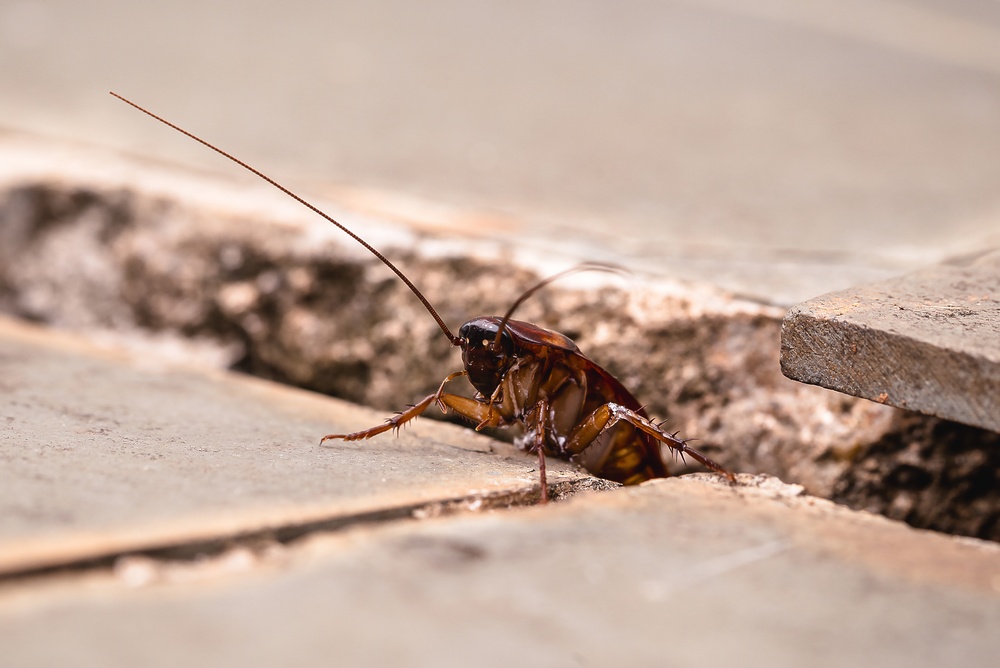
Cockroaches in Maryland enter homes through gaps around doors, foundations, and utility lines, often settling in areas where food, moisture, and shelter are available. American and Oriental cockroaches may come inside from outdoor habitats, while German cockroaches can live and reproduce indoors year-round. Knowing which species you’re dealing with helps you find the source of the activity and decide whether home maintenance will be enough or professional treatment is needed.
Why Cockroaches Enter Maryland Homes
Cockroaches need water, food, and places to hide. Leaking pipes, food residue behind appliances, and narrow spaces inside cabinets can provide everything they need within a small area.
For American and Oriental cockroaches, entry often begins with an opening in the building’s exterior. German cockroaches present a different concern because they can establish indoor populations without regularly traveling between the house and yard.
Moisture Makes Certain Areas More Attractive
Cockroaches depend on moisture to survive. A slow leak beneath the kitchen sink, condensation around basement plumbing, or water collecting near an appliance can provide a recurring source.
American and Oriental cockroaches are particularly associated with damp environments. They may live in sheltered outdoor locations and enter buildings through gaps near foundations, utility connections, or doors.
Finding a cockroach beside a floor drain doesn’t necessarily mean it came through the plumbing. It may have entered elsewhere and moved toward the moisture. Checking the surrounding openings is just as important as inspecting the drain.
Food and Shelter Allow Cockroaches to Stay
Kitchens offer food residue, grease, and crumbs that can collect beyond the reach of routine cleaning. Spaces behind refrigerators, beneath stoves, and inside cabinet corners also give cockroaches places to hide.
When food and water are consistently available, indoor species can continue feeding and reproducing without needing to leave the building.
A clean countertop doesn’t necessarily mean the surrounding kitchen is free of cockroach activity. The less accessible spaces behind appliances and cabinetry deserve attention when sightings continue.
Which Cockroaches Are Common in Maryland Homes?
Several cockroach species occur in Maryland, but they don’t all behave the same way. Some are primarily outdoor insects that occasionally enter houses, while others can establish breeding populations inside.
The University of Maryland Extension’s cockroach identification and management guide describes five species associated with Maryland buildings. Their appearance and preferred habitats offer useful clues about where to investigate.
| Cockroach | Identifying Features | Common Locations | What a Sighting May Indicate |
| American | Large, reddish brown, approximately 1½ inches long | Sewers, basements, humid utility areas | Outdoor entry or activity around damp spaces |
| Oriental | Dark brown to black, approximately 1 inch long | Damp basements, drains, shaded outdoor areas | Moisture problems or movement from outside |
| German | Small, light brown, two dark stripes behind the head | Kitchens, bathrooms, behind appliances | Possible established indoor infestation |
| Brown-banded | Small, brown, with lighter bands | Furniture, drawers, other concealed indoor spaces | Indoor hiding or breeding activity |
| Pennsylvania wood | Chestnut brown; males have developed wings | Woodpiles, wooded areas, lighted windows | Usually an accidental outdoor visitor |
American Cockroaches: Large Roaches Around Damp Spaces
American cockroaches are among the largest species found in Maryland buildings. Adults measure approximately one and a half inches long and have reddish brown bodies with a lighter marking behind the head.
They favor warm, humid environments and are associated with sewers, commercial buildings, and protected utility spaces. They can also live outdoors in Maryland during warmer weather.
If large cockroaches repeatedly appear in your basement, check for moisture around exposed plumbing and openings along exterior walls. Their size makes them noticeable, but it doesn’t tell you how many others may be present.
Oriental Cockroaches: Dark Roaches Near Basements and Drains
Oriental cockroaches are dark brown to black and typically measure about one inch long. They’re sometimes called waterbugs because they favor damp surroundings.
Outside, they may be found beneath stones, decaying leaves, and other debris in shaded areas. Inside, they often appear around moist basements, floor drains, and utility connections.
Unlike German cockroaches, Oriental cockroaches frequently move into buildings from outdoors. Repeated sightings near a basement entrance are a reason to inspect the door threshold, nearby foundation openings, and any persistent dampness.
German Cockroaches: Small Roaches That Reproduce Indoors
German cockroaches are smaller, light brown insects with two dark stripes running lengthwise behind their heads. They’re primarily indoor pests and commonly occupy kitchens and bathrooms.
They hide in narrow spaces near food and water, including cabinet joints, appliance openings, and plumbing connections. Females carry their egg cases until the young are ready to emerge.
University of Maryland Extension reports an average egg-to-adult development period of approximately 55 to 68 days, although development varies with environmental conditions.
Finding several German cockroaches, particularly when smaller immature insects are present, suggests that reproduction may be occurring indoors. That warrants closer investigation than a single large cockroach appearing near an exterior door.
Brown-Banded and Pennsylvania Wood Cockroaches
Brown-banded cockroaches are another indoor species found in Maryland. They favor warm, concealed places and may occur in furniture, drawers, and areas away from the damp spaces usually associated with German cockroaches.
Pennsylvania wood cockroaches behave differently. They normally live outdoors beneath tree bark, around dead wood, and in woodpiles. Adult males can fly and may be attracted to lighted windows.
These wood cockroaches sometimes enter homes through damaged screens or other openings, but they don’t normally survive or reproduce indoors. An occasional sighting may call for screen repairs or attention to nearby firewood rather than treatment for an indoor infestation.
Where Cockroaches Hide Inside a House
Cockroaches often remain hidden close to the resources they need. A roach crossing the floor may be easy to spot, but the area supporting its activity could be beneath a cabinet, behind an appliance, or inside a narrow wall opening.
Begin your inspection near the place where you found the insect. Look for moisture, food residue, and concealed spaces before moving into other rooms.
Kitchens and Bathrooms
Start beneath the kitchen sink. Check supply connections, drain fittings, and the cabinet floor for leaks or water damage.
Next, examine the spaces behind the refrigerator, beneath the stove, and around the dishwasher. Grease and crumbs can collect in these locations, especially where appliances are difficult to move during regular cleaning.
In bathrooms, inspect sink cabinets and openings around plumbing. Persistent moisture can support cockroach activity even when the room appears clean.
Basements and Utility Rooms
Basements are common places to encounter large American or Oriental cockroaches. Floor drains, exposed pipes, utility connections, and damp storage areas can provide favorable conditions.
Check for condensation on plumbing and water collecting near walls or equipment. Then inspect basement doorways and areas where pipes or cables enter through exterior walls.
An opening near a damp hiding place can provide outdoor cockroaches with a route into the building. Addressing both the access point and the moisture source is more useful than concentrating on the visible insect alone.
Furniture and Other Concealed Spaces
Not every cockroach stays near plumbing. Brown-banded cockroaches may occupy warm spaces inside furniture, drawers, or other protected indoor locations.
German cockroaches can also remain concealed behind cabinetry and appliances. Their hiding habits allow activity to continue without frequent sightings in open rooms.
If cockroaches repeatedly appear in one location, inspect the nearby crevices and protected spaces rather than assuming they’re traveling through the house from another room.
How Cockroaches Get Into Houses and Apartments
Outdoor cockroaches can enter through cracks, damaged screens, poorly sealed doors, and openings where utilities pass through walls. Other species may be brought indoors accidentally in furniture, appliances, or belongings.
Determining how cockroaches arrived helps narrow the appropriate response. Exterior repairs can reduce access for outdoor insects, while an established indoor population requires attention to the places where cockroaches are hiding and reproducing.
Gaps Around Doors, Windows, and Foundations
Inspect the bottom of exterior doors for worn sweeps or openings along the threshold. Check window screens for damage and examine gaps around utility lines entering the building.
Pay particular attention to areas near previous sightings. Large cockroaches repeatedly appearing near a basement entrance may be using openings around that doorway or an adjacent foundation wall.
Repairing these gaps can reduce outdoor entry. It won’t eliminate cockroaches already breeding inside cabinets or other concealed spaces.
Furniture, Appliances, and Stored Belongings
Some indoor cockroaches can be introduced through items brought into a building. Furniture, appliances, boxes, and other belongings may provide temporary hiding places during transport.
Once inside, German cockroaches can settle in sheltered areas where food and water are available.
Inspecting secondhand furniture, appliances, and stored belongings before bringing them indoors can help reduce accidental introductions, especially when the items come from a location with known cockroach activity.
Shared Spaces in Apartments and Attached Homes
Cockroaches can move through connected spaces in apartment buildings and attached homes. Gaps around plumbing, utility penetrations, and structural openings may provide routes between units.
German cockroaches are particularly troublesome in these settings because they reproduce indoors and can travel through narrow gaps.
If sightings continue in an apartment, record where the insects appear and notify property management. When multiple units are affected, inspection and control may need to extend beyond a single residence.
How to Tell Whether You Have a Cockroach Infestation
Finding one cockroach doesn’t establish an infestation. The species, location, and frequency of sightings provide a better indication of whether insects are entering occasionally or living inside the home.
A Pennsylvania wood cockroach near a lighted window is a different concern from repeated German cockroach sightings inside kitchen cabinets.
Signs That Cockroaches May Be Breeding Indoors
Look for evidence such as:
- Repeated sightings in the same room
- Small, immature cockroaches appearing alongside adults
- Egg cases inside cabinets or other protected locations
- Droppings collecting near suspected hiding places
- Activity behind appliances or around plumbing
- Cockroaches appearing in several rooms
Immature German cockroaches are an important clue because their presence suggests reproduction has occurred nearby.
Repeated daytime sightings may also justify closer inspection. However, one cockroach appearing during daylight doesn’t establish how large an indoor population might be.
Use Monitoring Traps to Locate Activity
Sticky monitoring traps can help show where cockroaches are traveling. Place them according to the product instructions near suspected hiding places, including cabinet edges and spaces behind appliances.
Check them regularly and record where insects are captured. Repeated catches in the same location can help identify areas that need further inspection.
Monitoring traps are useful for detecting activity and tracking changes. They aren’t sufficient on their own to control an established infestation.
How to Make Your Home Less Attractive to Cockroaches
Cockroach prevention is most useful when it addresses the conditions already present in the home. Repairing leaks, removing accessible food, and sealing entry points each reduce something cockroaches depend on.
Start with the rooms where you’ve seen activity and expand the inspection if additional evidence appears.
Repair Leaks and Reduce Indoor Moisture
Check faucets, sink connections, dishwasher lines, and exposed plumbing for leaks. Remove standing water and investigate recurring condensation.
Damp basements and poorly ventilated utility areas may benefit from dehumidification. However, a dehumidifier won’t correct a leaking pipe or water collecting beneath an appliance.
The EPA’s guidance on controlling biological contaminants indoors recommends keeping indoor relative humidity below 60%, ideally between 30% and 50%.
This is a general moisture-management recommendation, not a threshold that guarantees cockroach prevention. Correcting the actual source of excess water remains essential.
Remove Food Residue and Reduce Clutter
Clean behind appliances, beneath cabinets, and around areas where grease or crumbs accumulate. These overlooked spaces can provide food even when kitchen counters are regularly cleaned.
Store food in sealed containers, manage garbage regularly, and avoid leaving pet food accessible overnight.
Remove unnecessary cardboard and clutter from locations where cockroaches have appeared. Fewer concealed storage spaces make inspection easier and reduce places where insects can remain hidden.
Seal Openings and Continue Monitoring
Repair damaged screens, replace worn door sweeps, and close suitable gaps around plumbing or utility lines.
Focus first on openings near previous sightings, particularly basement entrances and exterior utility connections where larger cockroaches may enter.
Continue monitoring after repairs. If cockroaches keep appearing, especially when immature insects are present, the activity may involve an established indoor population that needs further assessment.
When Professional Cockroach Control Makes Sense
Repeated cockroach sightings, egg cases, immature insects, or activity spreading between rooms are reasons to consider professional assessment.
Indoor populations can remain hidden behind appliances, within cabinets, and in structural gaps that are difficult to inspect. Routine cleaning and moisture repairs are important, but they may not be enough once an infestation is established.
Cockroach droppings and body fragments also contain allergens that can trigger allergic reactions or asthma symptoms in susceptible people. Persistent activity in kitchens and living spaces should be addressed rather than ignored.
An established infestation may require professional treatment when household cleaning, moisture repairs, and entry-point sealing haven’t resolved the activity. The species involved helps determine whether the problem centers on outdoor entry or reproduction inside the building.
Effective professional pest control begins with identifying the pest and locating the affected areas. For cockroaches, that means assessing the hiding places and conditions supporting activity before determining an appropriate treatment approach.
Get Help With Recurring Cockroaches in Maryland
If cockroaches keep appearing in your kitchen, bathroom, or basement, Pest Services Company offers roach control services based on the species and conditions found at your property.
An assessment identifies the cockroach species, examines affected areas, and helps determine the appropriate treatment. Outdoor cockroaches entering through foundation gaps and German cockroaches reproducing behind appliances may require different measures.
Review the company’s service areas to confirm local coverage, or contact Pest Services Company to discuss recurring activity and request assistance.