
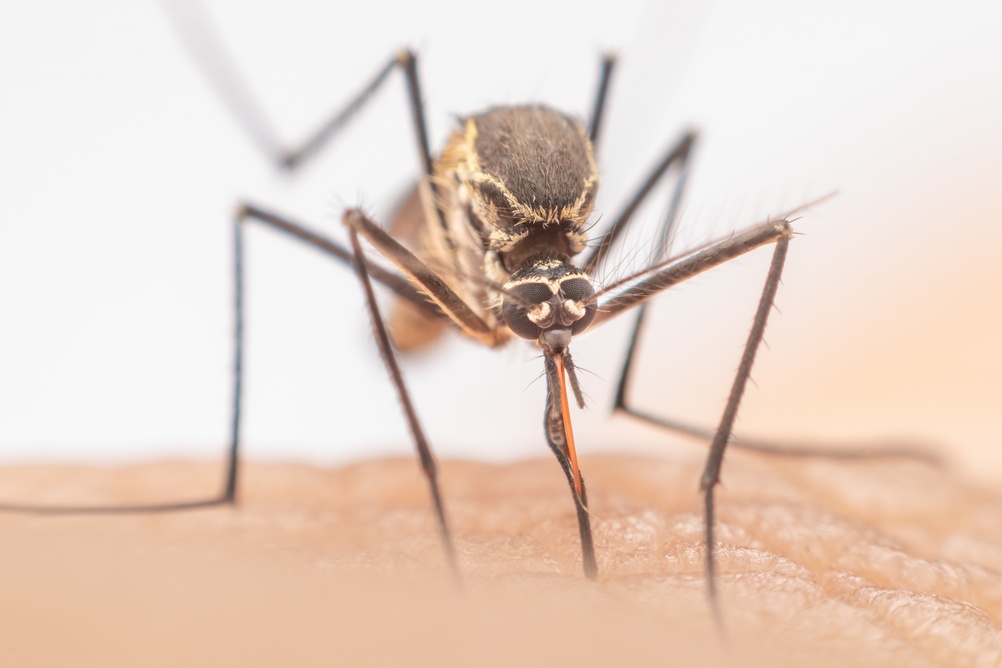
A mosquito bite may look like a simple puncture, but the itching starts with what the mosquito leaves behind. While feeding, a female mosquito introduces saliva into the skin. Your immune system recognizes parts of that saliva as foreign and responds with inflammation, swelling, and the urge to scratch.
Some people develop a small bump within minutes, while others notice a firm, itchy welt hours later. Repeated exposure can make the immune system react more quickly, although some people eventually become less sensitive to familiar mosquitoes.
What Happens When a Mosquito Bites You?
Only female mosquitoes take blood meals, and most need blood to produce eggs. According to the Centers for Disease Control and Prevention’s mosquito-bite guidance, a mosquito feeds by piercing the skin with a specialized mouthpart called a proboscis.
Its mouthparts probe the tissue, find a small blood vessel, introduce saliva, and take a blood meal. Most visible irritation comes from the body’s response to salivary material left in the skin, not from the amount of blood removed. Components in the saliva also interfere with clotting long enough for the mosquito to finish feeding.
Why Mosquito Saliva Causes a Reaction
Mosquito saliva is a complex mixture rather than a single substance. A study published in PLOS Neglected Tropical Diseases describes it as containing more than 100 proteins, many of which do not yet have fully understood functions.
Some salivary components help prevent clotting or reduce platelet activity, while others influence blood vessels, inflammation, or immune signaling. The itch is not caused by a single injected chemical. It develops when the body detects foreign material and responds to it, often after the mosquito has flown away.
How the Immune System Creates the Itch
Once salivary proteins enter the skin, immune cells begin responding. Mast cells located near blood vessels and sensory nerves can release histamine and other inflammatory signals. Histamine widens nearby blood vessels and makes them more permeable, allowing fluid to move into surrounding tissue. The result is redness, puffiness, and a raised bump.
Histamine also activates nerve endings associated with itch. Those nerves send signals to the brain, creating the urge to scratch.
Histamine Is Only Part of the Explanation
Histamine is central to many mosquito-bite reactions, but it is not the only factor. A peer-reviewed Frontiers in Immunology review of mosquito-bite reactions explains that both histamine-dependent and non-histamine pathways may contribute to itching and swelling.
Other inflammatory mediators can sustain delayed reactions, which may be why an antihistamine reduces discomfort without eliminating every symptom. Most reactions remain limited to the skin around the bite.
Why Some Mosquito Bites Appear Later
Mosquito bites can cause an immediate reaction, a delayed reaction, or both. The timing depends partly on how the immune system has responded to similar saliva in the past.
An immediate reaction may appear within minutes as a soft, reddish, raised area called a wheal. The Frontiers review describes a typical immediate wheal as approximately 2 to 10 millimeters across, with the response often peaking about 20 to 30 minutes after the bite.
A delayed reaction develops more gradually. The area may become firmer and itchier several hours later, with the delayed papule often peaking 24 to 36 hours after exposure. It then fades over the following days unless scratching or another complication prolongs the irritation.
| Time After the Bite | What You May Notice |
| Within minutes | A soft, puffy, reddish wheal |
| About 20 to 30 minutes | The immediate reaction may peak |
| Several hours later | A firmer, itchier bump may develop |
| About 24 to 36 hours | The delayed reaction may be most noticeable |
| Over the following days | Redness and itching usually begin to fade |
This timeline explains why someone can wake up with bites that were not visible the night before.
Your Immune System Learns From Repeated Bites
The immune system may not produce a strong visible response the first time a person encounters saliva from a particular mosquito species. After repeated exposure and sensitization, later bites may trigger faster or more pronounced inflammation. Someone who once developed only a delayed bump may begin experiencing an immediate wheal followed by an itchy papule. In that sense, the immune system remembers earlier exposure.
Reactions Do Not Always Become Stronger
Immune memory does not mean every mosquito bite will itch more than the last. Long-term exposure can eventually lead to partial or substantial desensitization. A person may continue to encounter local mosquitoes but develop smaller bumps or little visible reaction.
Other people remain reactive for years. Responses can also change during travel because an unfamiliar mosquito species may have a different mix of salivary proteins. The immune system may become more sensitive, remain consistently reactive, or become less responsive after prolonged exposure.
Why Some People Develop Larger Welts
The size of a mosquito-bite reaction reflects the immune response, not the amount of blood removed. Age, previous exposure, individual sensitivity, and immune health can all affect the result.
Children may have more noticeable reactions because they have had less time to become desensitized to local mosquitoes. Adults can also react strongly to unfamiliar species. A large local reaction commonly called skeeter syndrome may involve extensive redness, warmth, swelling, and itching.
A large welt does not prove that the bite is infected, and it does not indicate whether the mosquito carried a pathogen. Worsening pain, spreading redness, drainage, increasing warmth, or a red streak extending from the bite should be evaluated by a healthcare professional.
Why Scratching Makes the Bite Worse
Scratching can feel satisfying because pressure and mild pain briefly compete with the itch signal traveling to the brain. The relief is temporary. Scratching irritates inflamed tissue, which can increase redness and prolong discomfort.
Repeated scratching can break the skin barrier, giving bacteria from the hands, fingernails, or surrounding skin a path into the wound. It does not simply spread mosquito saliva under the skin. By the time itching begins, the immune response is already underway.
How to Calm an Itchy Mosquito Bite
Most uncomplicated bites improve with basic care. Wash the area with soap and water, then apply a cold pack wrapped in cloth for about 10 minutes. Cold can reduce swelling and temporarily quiet the nerve signals involved in itching.
An over-the-counter anti-itch product or antihistamine may help when used according to the label. Avoid household remedies that may irritate the skin. Seek prompt medical care for trouble breathing, swelling of the face or throat, faintness, widespread hives, fever, severe symptoms, or signs of infection.
How to Prevent More Mosquito Bites
The most effective way to avoid the itch is to prevent mosquitoes from feeding. Use an EPA-registered insect repellent according to label directions, wear clothing that covers exposed skin, and repair damaged window or door screens.
Around the yard, empty and scrub containers that hold water at least once a week. Buckets, planters, toys, clogged gutters, and other small containers can provide places for mosquitoes to lay eggs. Reducing standing water will not eliminate every mosquito, but it can remove breeding opportunities close to the home.
When mosquito activity keeps you from enjoying your property, Pest Services Company can help identify problem areas and develop an appropriate control plan. Homeowners and businesses in Washington, DC, Maryland, and Northern Virginia can contact the mosquito control team to discuss service options.
A mosquito bite is the visible result of an interaction between mosquito saliva and the immune system. Saliva helps the mosquito feed, while the body responds with inflammation, swelling, and itch. Previous exposure shapes that response, but it does not guarantee that future bites will become progressively worse. The immune system remembers, adapts, and sometimes becomes less reactive over time.